Showing posts with label Research. Show all posts

Tuesday, 5 December 2017

'Total Film' Film review research


'Total Film' layout research:
Total Film predominantly go for a layout which has a main picture situated at the top of the page which comes down to around halfway. The photo usually has a short explanation which appears within the photo and the title of the film cutting into the bottom left section of the photo. In the top right section of the magazine another indentation to the photo is made in order to show the audience films that are similar to the main focal film- these usually come alongside a brief summary of the film mentioned. In the top left hand corner of the 1 page layout, the area of the magazine, that the review can be found, in is stated in a bold black font (this font is easy to read and has a slight curve to the letters.) Additionally, within the writing itself there is a small red box with the first letter of the article within it in order to make the page stand out even more than usual. Situated above the red box is a star rating which is paired with a small tag line in order to describe the film. The article itself also uses a pull quote just off the centre right of the page which is usually an eye catching and engaging statement from the paragraph to the left of it. Another noticeable element is the graph at the bottom left of the page which describes the predicted curve (view) rate of the film with small annotations and a red outline. This therefore shows me that when creating my own film poster I should be looking to stick to a black and red colour palette and make the font easy to read and slightly curved (possibly elephant font). Furthermore, when designing the layout I will have to make sure I accommodate space for the graph in order to make it as close to the original as possible.

Thursday, 9 November 2017

Institutions who regularly make short films

Sundance institute/ Sundance film festival: January every year the Sundance film festival showcases between 70 and 80 short films in order to give a platform to up and coming film directors and film makers. Any genre can be submitted as long as the film is 49 minutes of under.
BFI academy: Institution set up tro specifically give a platform to budding film makers between the ages of 16 and 19 anywhere in the UK. The scheme gives at least 40 hours of training through work shop schemes with many experts for the cost of £25 through which you are taught to create a short film and given the chance to release it.
 i Features: "Creative low budget film initiative" and is supported by the BFI and BBC. Aimed to help low budget feature films. Will help up to 6 films a year and 3 of these films will be selected to create a feature short film on a £350,000 budget.
BBC Films: offers support to up and coming film makers through helping to produce 8 films a year.

       
BFI - homepageImage result for sundance                         

Friday, 20 October 2017

Camera angles and movement in the drama genre

The drama genre does not strictly stick to one use of camera angles and movement. The genre allows for a wide variety of shots in order to create meaning and juxtaposition of thoughts and feelings as the narrative of the film progresses. Shots such as: close ups, point of views, eye line match, long shots and mid shots can all be used creating a wider range of potential shots in order to create meaning within the film. Tarantino uses a unique style in order to create his instantly recognisable films within the drama genre as it is a genre which allows for own specific adaptation and style. For example this scene in 'Pulp Fiction' the shot reverse shot used at the end of the film when the gun shots are going off contrasts to the fairly slow pace of the rest of the scene , as well as the colour scheme therefore creating a unique style to Tarantinos work. This therefore leads our group to the decision that rather than focusing solely on a unique range of shots we would put emphasis on the dialogue, specifically the overlapping parts in order to create a unique style.


Thursday, 19 October 2017

Credits in short films


"The Jigsaw" uses both credits and titles in stereotypical way, with the title sequence coming at the start of the film before any of the main action and the credits at the end, showing people who had worked on the film. This film in particular uses makes the titles appear in an interesting manor- which fits with the title of the film, through being formed in the style of a jigsaw puzzle- whilst the credits at the end are very simple in order to allow the audience to read them. The interesting style which is used in bringing the titles into the film is something that I will take inspiration from as it made the film appear in a much more professional way, as well as meaning that the audience were gripped by the film from the very start.

Friday, 13 October 2017

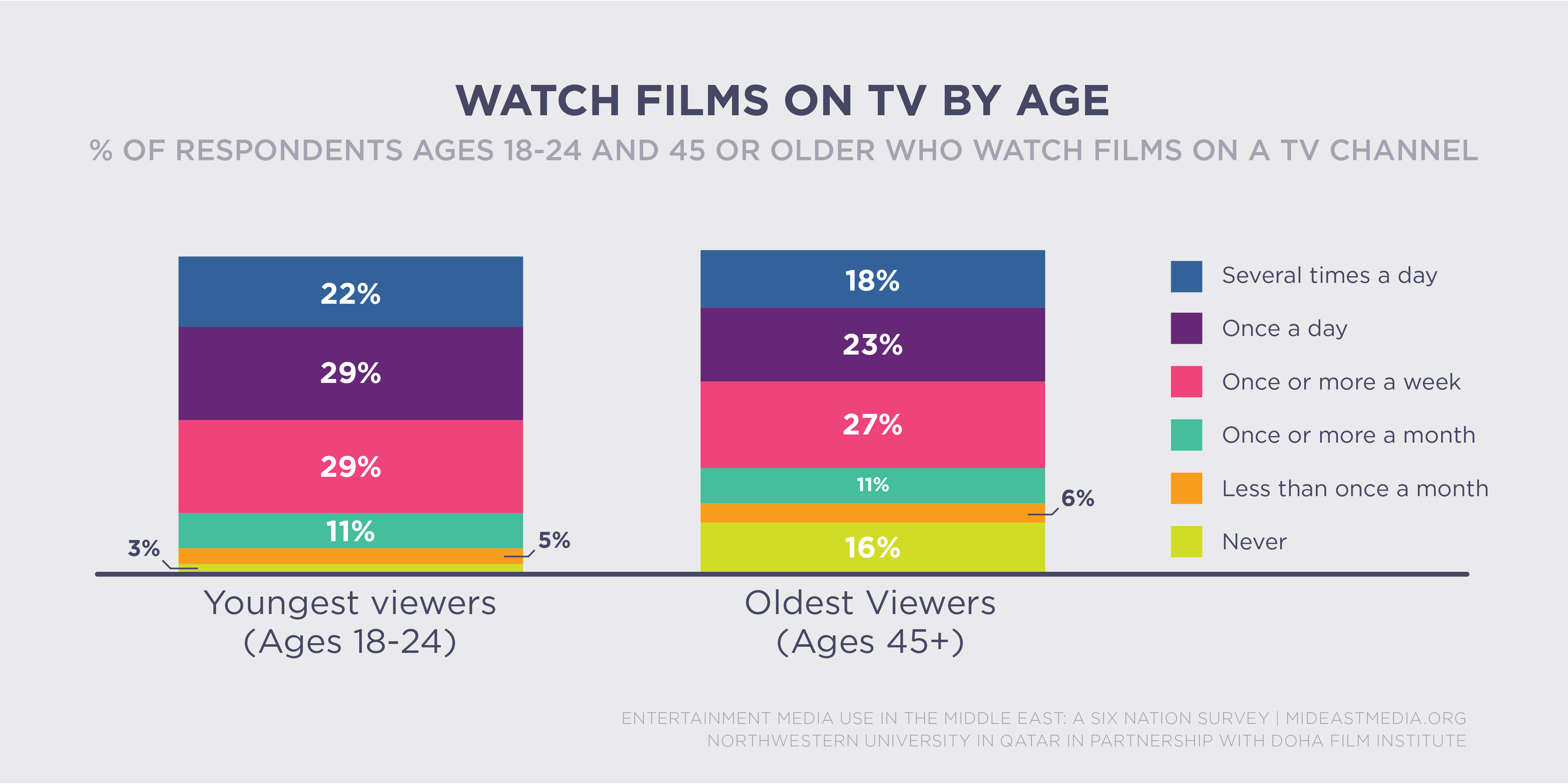
Viewing figures of young/old for films on T.V.


From this graph I am once again able to notice that I should be targeting the young teenage age groups as this is the group who watch films more regularly according to this research. Although there is very little between the two groups the amount of youngsters who don't watch films at all is significantly less than the older people that do not watch films and this therefore leads me to stick with my choice of targeting the young teenage age group.

Monday, 9 October 2017

Certification Research

 Suitable for all. A film rated U would need to be acceptable to watch for people aged 4 and over. Under the British Board Of Film classify film rated U must have 'positive framework' and if any violence is used must be balanced out with a solution which reassures the children nothing is wrong.These films must not include:drugs, discrimination, anti-social behaviour or nudity with any sexual context.
Parental guidance. General viewing that is not harmful to children aged 8 or older. These films may be viewed as unsuitable for young children. The British Board of Film classify that any child over 8 can watch a PG film as long as they have parental concession. Discrimination is unlikely to be acceptable. If drugs are mentioned then an anti drug message must be used. Only mild language, no nudity with any sexual context and threat and violence must only be short and mild.
Acceptable to be watched by children 12 and over or anyone younger as long as they are with an adult. These films would not contain material that is generally suitable to children under the age of 12. In these films misuse of drugs must be infrequent. They have to be aware of behaviour that these children may try to copy so keep it clean. Moderate language can be used, nudity is allowed but in any sexual context must be mild and discreet. There may be moderate physical,psychological or horror sequences. Violence must also be moderate.
 According to the Brtish Board of Film classification 15's are to be viewed by no one younger than 15 may see a 15 film in a cinema. No one younger than 15 may rent or buy a 15 rated video work. Films classified as 15 can use racist or homophobic language,but must not endorse the use of it. Drug use can be shown however, must not endorse the use of it. There may be strong language. No restraints on nudity, may be strong threat and horror and violence may be strong but not focus on injuries too severely.
According to the British Board of Film classification 18's are to be viewed by no one younger than 18 may see an 18 film in a cinema. No one younger than 18 may rent or buy an 18 rated video work. Adults should be free to choose their own entertainment. Sexual activity or explicit images are accepted. 18's are not strict on what can and can't be used in films as they believe that viewers are old enough to make decisions on what is right and wrong.

The certification that we wish to focus our film is the 12A
 as we believe that we can create a good film with all the concepts that we wish to use without having to go into lots of detail in the more gruesome scenes. This means that we can use moderate language and moderate physical an psychological sequences which will be more than adequate for our short film.

Wednesday, 4 October 2017

YouGov profiles

YouGov profiles recommend that our target audience should be middle aged men between the ages of 25-50, however as a group we have decided that this will not benefit us as we know from other areas of research that the amount of older people ,compared to teenagers and young adults, who have watched short films is much smaller and therefore it would not allow the film to develop recognition within the industry. This has therefore lead us to targeting a largely male dominated audience from the ages of 12-25 in order to allow for a wide range of views and focus on putting the film across to the younger audiences through various social media platforms- such as YouTube.

Monday, 2 October 2017

Editing styles in the thriller and drama genre

Thriller genre:
Quick cuts- When quick cuts are used in the thriller genre the audience are lead to believe that there is a build up of something about to happen on screen


In the film 'inception' the quick cuts work well as they contrast to the real time scenarios within the film which sees the action happening in slow motion in order to engage the audience in a compelling and interesting narrative.

Drama Genre:
In the drama genre the director intentionally uses every shot in order to convey a certain message which they have already created a storyboard and screenplay for. When filming a drama many different takes will have been filmed from many different angles in order to see which works best in post production editing.


The film 'The Imitation Game' is a good example of seeing how a director has chosen specific shots in order to create a compelling and attractive film in the drama genre. The director has chosen to have close up shots of the two characters speaking at the start in shallow focus so that the audience know where to focus their attention. However, as the film progresses, the audience do not always see the person speaking and are instead shown an action shot of one of the characters in order to connote to the audience how the person is feeling about the conversation. This is something we as a group will try to recreate in order to fit the drama genre and to give the audience a simple connection to both the film and characters as they fully know what they are focusing on.

Sunday, 1 October 2017

Distribution choice

The website I have decided to distribute my film on is YouTube due its wide range of creative products which would allow me to gain a very large audience where viewing would be free, thus allowing me to gain recognition for my film rather than money. I came to this decision following looking at other websites such as Netflix and Short Of The Week, where much more recognised films are posted and therefore it would make it very hard for myself to gain any sort of recognition. Overall, I think this will be a good decision for my group going forward as this allows for the exposure we need and could also potentially lead to the film being brought
onto the other websites mentioned further in the future.

Friday, 29 September 2017

Sound in the thriller and drama genres

Sound in any film is important due to the relationship that it creates between the locations and characters in the film. (Non-diegetic) Music in films accompanies the shots that are shown on the screen in order to make sure that the audience understand the film in the best possible way. Sound in a film becomes crucial otherwise the film can appear as amateur.
Thriller-
In the thriller genre music of high tension which sounds eerie is predominantly used in order to make the audience sit in anticipation of something happening and to make them feel scared. However, silence can be used in the thriller genre in order to give the same effect as the tense music. The pace of the music in thriller films usually starts at a slow place which gradually builds up in pace in order to signify the film moving towards a climax a specific scene.


The thriller film 'Shutter Island' uses sound in a typical way associated with the thriller genre as the music is very dark and eerie and the music builds through out as they drive through the asylum- which makes the audience believe that something is about to happen. This is therefore the style we will choose to use when picking sound to be included in our film in order to present a similar portrayal to our own target audience.

Drama-

In the drama genre diegetic sound is much more integral than in most films. The diegetic sound, especially the dialogue helps to drive the narrative forward. In 'The Dark Knight Rises' the diegetic sound such as the sirens and reeving from the cars helps to compel the audience into the film and only uses a faint non-diegetic soundtrack in order to make the action even more heightened. This therefore has lead to the decision of making the film driven much more by the diegetic sound and dialogue, rather than the non diegetic and soundtrack to be paired with it.

Tuesday, 26 September 2017

'Split' influence

'Split' Trailer. One of the main influences on our style of film:


The style of film and the various different characters leads to a compelling story which engulfs the audience right until the very end. The camerawork is clever and Mcavoy's acting creates a interesting, yet understandable sense of all of the different personalities portrayed throughout the film:


Mise-en-scene in the thriller genre

Funding options for short films.

Funding options for short films-
Funding for short films can come in many ways. The two most common ways are: winning funding through competitions and promoting ideas to companies through proposal schemes. For example the BFI run a Network scheme in which you present an idea through a website and they decide whether to give the film idea funding and how much to give them. Another alternative is through going to a proposal meeting with companies,investors, producers or crowdfund schemes in order to try and get money given to you. This scheme would potentially work better as you are able to gain a personal face to face relationship with the person that you are talking to.

Companies who offer funding:
BFI Films                                                                                                 BBC Films


Film4                                                                                                        Creative England Fund


Film London                                                                                           Creative Europe Desk UK

Thursday, 21 September 2017

History of the drama genre

When speaking about drama the main genre is usually split down into many sub genres e.g. Political dramas, historical drama or even sometimes comical drama. These sub-genres usually mean that the drama has a specific setting or subject-matter. 

History of the horror drama:
Horror films are made in order to target the part of the brain that creates a less logical sequence of events. They can tell dark stories about the unimaginable or target the realistic anxieties that we have in life.

The first known horror film is a film called 'Le Manoir du Diable'- which was produced in the late 1890's. Japanese horror is one of the first sub genre of the horror genre to be created. The earliest films date back to 'Bake Jizo' and 'Shinin no Soseis'. 

Many books turn into horror films such as the first adaptation of Mary Shelley's book 'Frankenstein' was made in 1910 which followed in the footsteps of Robert Louis Stevenson's book 'Dr Jekyll and Mr Hyde' made in 1908.

During the period of 1930-1940 Gothic horror took off with films such as Tod Browning's Dracula and another adaptation of Frankenstein this time by James Whale in 1931. During this period Gothic horror films were sometimes infused with the science-fiction genre to create films such as: 'The Invisible Man' which featured a mad scientist.

During the 1950's-60's the Gothic horror was surpassed by sub genres such as the Demonic film. The film production company 'Hammer' was created during this era. Also the events of the bombing of Nagasaki and Hiroshima in Japan led to the creation of 'Godzilla'. Peeping Tom made in 1960 was the first of the slasher genre which cemented place as a horror sub-genre with the film 'Psycho'
The 1970's-1980's was the development of the low budget gore films. The 1990's was very similar to the previous years and followed the same genre. Many of the films created during the 70's to 80's got their sequels in the 90's.

During the modern day period of the genre a lot of film companies focus on producing remakes of popular horror films and the production of horror T.V. series such as 'The Walking Dead' and 'American Horror Story' have become ever prominent.

Many horror dramas focus on imperilled characters dealing with an emotional struggle which is very realistic to them. Many often involve dysfunctional family relations, shown within a horror environment. The horror sequence usually unravels against a dramatic plot. This would be good for our film as the horror element of the mental illness could compliment the dramatic sequence of the man having the conversation with 'himself' which the audience doesn't know and therefore are waiting and listening to the conversation.

Wednesday, 20 September 2017

History of the thriller genre

The thriller genre is one of suspense and excitement. Tension is built by delaying what the audience sees to be inevitable but is built through situations which are seen to be inescapable. Thriller films are usually hybridised with sub genres such as action thrillers or sci-fi thrillers. For example ours will be a psychiatric thriller.

1920's-30's
In this era producers used to constantly regurgitate common ideas at the time with the instalment of long running franchises with each film ending with a cliffhanger that sees the hero in great danger. The 30s was the age of witty gentlemen detectives who constantly used one liners rather than violence to get out of a tough situation. Sir Alfred Hitchcock's "The 39 Steps" was seen as setting up the template for exotic action action-adventure thrillers. The film was filled with chase sequences and a constant exchange of innuendos between Robert Donat and his leading lady.

1940's
In this period the genre toughened up with a flourish of urban crime in which there were fedora, trench coat wearing figures stroll through the cities late at night in order to solve mysteries. The plots were dense and the mood was hard bitten which went perfectly with the weary post war period. George Cukor brought in a psychological thriller in 1944 called "Gaslight". It was about a husband who plotted to make his own wife go mentally insane in the hope that he would gain her financial inheritance.

1950's - 60's
Alfred Hitchcock made a dramatic change to the thriller genre but bringing in the use of colour so that they were no longer black and white. Glamour was also added to his famous thrillers with the introduction of  'icey blondes' in the casting of his leading ladies. The first of these was "Strangers on a Train" in 1951. Constant repetition in thriller films in this period lay down the basic building blocks for creating a thriller film. "Peeping Tom" was a 1960's psychological thriller which featured a serial killer cameraman - the film was seen as controversial and received and extremely harsh reception.

1970's
This period brought in a increase of violence and horror to the thriller genre. There was almost an overlap between the horror and thriller genre with films such as "Wake in Fright" and Hitchcock's "Frenzy" which received an R rating for its vicious and explicit strangulation scene.

1990's
Thrillers began to have recurring elements of obsession and trapped protagonists who struggle to escape the clutches of a villain. Then the detectives who chased down a serial killer seemed to be the next trend for thriller genre. "The Silence of the Lambs" is a famous example of a thriller film in which a cannibalistic psychiatrist engages in conflict with an FBI agent whilst she hunts down a transgender serial killer.

Tuesday, 12 September 2017

'Split' Character analysis

Image result for split characters'Split' contains 23 different personalities all portrayed by actor James McAvoy, but throughout the film the audience only see 9 of these personalities. All of these personalities both contrast and compliment eachother in order to create a compelling narrative which is both thrilling, but funny.
The characters that are shown are:
Kevin Crumb- a polite and gentle man who is the original personality who is horrified by the actions of the other personalities in the film.
Image result for split charactersDennis- Dennis is a highly serious character who is a fierce defender of Kevin. Dennis suffers from OCD and is also affected by a repressed, but fierce libido (this is the character who abducts the three girls).
Hedwig- the 9 year old character who is obsessed with Kanye West. He loves to dance and chat in his room, but is disheartened by the fact that people do not take him seriously.
Patricia- A cross dressing matriarch who is obsessed with fashion. Has a precise and cold personality.
Image result for split charactersBarry- the main character who spends the most time in control. He is a very kind and gentle character, but does not realise how much trouble he is in.
Orwell- An over analytical scholar who scruciates everything instead of trying to solve them.
Jade- a kind girl with diabetes.


Monday, 11 September 2017

Schizophrenia hallucinations

Audiotory hallucinations- Voices that are talking to or about the person. They either provide a running commentary of the persons life or tell them what to do. The voice may also warn the person about potential danger around them. Schizophrenic hallucinations that command people what do can be potentially dangerous as it can lead the person towards suicide, it could also mean the person stops taking their medication as they are told that everyone in the world is out to get them. Auditory hallucinations also disrupt the persons thinking making it difficult for them concentrate. Auditory hallucinations can also include things that are not voices e.g. music, footsteps or sirens.

Visual hallucinations- Seeing things that are not really there. Images may be very clear or they may be distorted. These hallucinations can be very scary depending on the image.


Olfactory hallucinations- involve the sense of smell. Usually an unpleasant smell, which at times the schizophrenic believes is coming from their body.

Tactile hallucinations- involve the sense of touch. They believe that either bugs or snakes are crawling on them or inside their body. The other possibility is that they believe a persons hand is touching them.


Gustatory hallucinations- involve the sense of taste. This usually means that they taste something strange when either eating or drinking.

Friday, 8 September 2017

Research into schizophrenia

The symptoms of schizophrenia include things such as; hallucinations (which can be both in hearing and vision), delusions- which are beliefs that are unusual and not usually based on reality- through which both of these symptoms lead to muddled thoughts as the person is unable to tell the difference between reality and imagination. Another known symptom is that people with schizophrenia usually become emotionless and flat due to them taking themselves away from social situations- which most of the time goes unnoticed. Some people hear voices that are friendly and pleasant, but more often they're rude, critical, abusive or annoying. The voices usually give instructions to the mentally ill person, discuss the thoughts of feelings of the person and describe activities taking place. The voices can come from anywhere- different places or one specific place e.g. a television. Some people experience trouble concentrating on tasks for a long time, such as reading a newspaper or watching t.v.
Image result for schizophrenia graph
Graph showing how the onset of schizophrenia is very common in teenagers and less likely when a person grows older. Therefore leading to a group decision to not include older aged people so that the film takes on a factual concept. 

'Of Unsound Minds' Final Draft